
WHY TRADE INTERNATIONALLY?
Believed to have been in use since 6000 BC, one of the oldest shipping ports in the world is located on the eastern side of the Mediterranean Sea. The climates, geographies, and economies of countries around the world can differ greatly, each country having its own unique strengths in producing specific types of commodities. In ancient times some of the most highly internationally traded commodities were timber, precious metals, spices, fine textiles, and of course – wine!
In today’s global economy, opportunities for cost-effective sourcing, growth, and expansion often lie beyond borders. But navigating the complex world of international trade, customs compliance, and logistics can be challenging.
Customs authorities play a crucial role in facilitating and regulating global trade. Their responsibilities extend far beyond inspecting goods at borders. The role of customs within international trade is to support countries and businesses by; ensuring trade compliance, protecting national security, protecting the local economy, revenue collection, and enhancing trade opportunities.
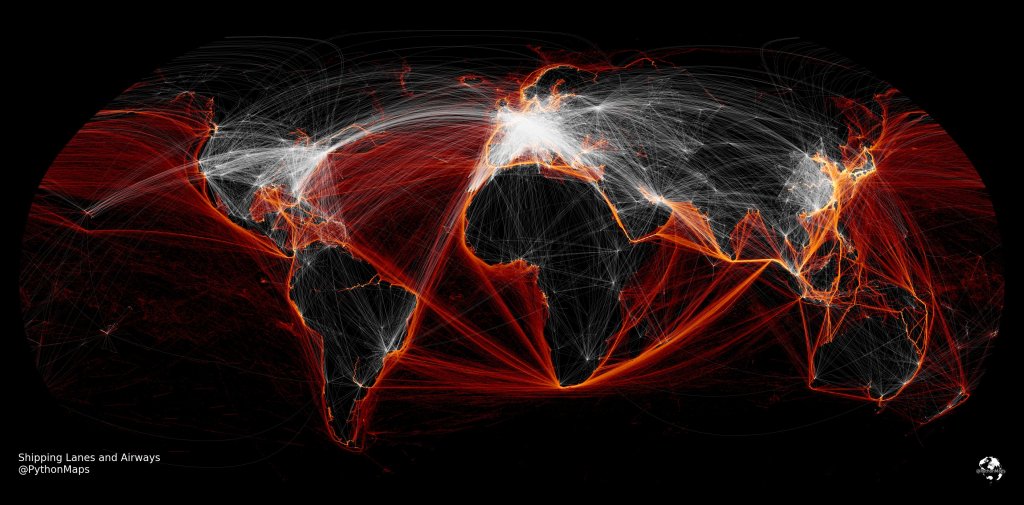
Modern day ocean and air trade routes (python maps):
WHY INVEST IN YOUR IMPORT & EXPORT OPERATIONS?
1. Expand Your Market Reach: Accessing international markets allows you to diversify your customer base and tap into new revenue streams. By exporting goods and services, you can grow your brand globally and reduce dependence on domestic markets.
2. Competitive Edge: Efficient sourcing & trade operations can save you time and money, giving you a competitive advantage. By taking advantage of overseas manufacturing costs and import tariff benefits, you can deliver more cost-effective products to your customers.
3. Leverage Tariff Benefits: Taking full advantage of Free Trade Agreements (FTAs) and preferential origin tariffs can significantly reduce stock standard costs.
4. Mitigate Risks: International trade comes with inherent risks, such as customs regulations, tax management, operational delays, and financial penalties. Ensuring you have correct processes, documentation, and supporting knowledge can minimise disruptions, protect your supply chain, and protect your finances.
THE IMPORTANCE OF CUSTOMS COMPLIANCE
1. Avoid Costly Penalties: Non-compliance with customs regulations can lead to fines, delays, or even seizure of goods.
2. Build Trust and Reputation: Compliance isn’t just about avoiding penalties — it’s about building trust with authorities, customers, and partners. A strong compliance record demonstrates your commitment to ethical and professional practices.
3. Stay Ahead of Regulatory Changes: There are regular changes to trade & customs regulations, it is a continuously evolving trade landscape.
4. Optimize Your Processes: Customs compliance goes hand-in-hand with efficient logistics. By aligning your trade practices with compliance requirements, you can optimize your supply chain for faster, smoother operations.

“Alex has a very good knowledge of the customs process and goes above and his contractual obligation to make sure your questions are answered. We will be working with Alex again. Highly recommended!“
 Customs Corax